
From Freelancer to Founder: The Architecture of Agency Growth
Why agencies stall when every decision runs through the founder, and the three layers of systems that let the business work without you.
The freelancer trap
Most freelancers who start agencies do not build agencies. They build elaborate replicas of themselves. They hire people who do exactly what they do, manage them the way they managed themselves, and call it scale. Revenue grows and the founder is more stretched than before. At an IxDF session in Lahore, I spoke with UX designers and agency owners about turning solo design work into a business. The question I would put to any of them is this: if you disappeared for 90 days, what would happen to your business? Few founders have a comfortable answer.
The freelancer trap is about how the business is built more than how much it earns. You can charge $200 an hour or $20,000 a month, but if every decision, every client call and every quality check routes back through your head, you have built a job with extra steps. The moment you stop, the work stops. What you have at that point is a consultancy with employees, and it depends on you as much as freelancing ever did.
Pakistan has a deep pool of design talent, and Lahore adds to it every year. Talent supply is rarely the constraint. Operational infrastructure is. Most of the design agencies I see here are built on founder dependency: the founder sells, the founder reviews, the founder fixes. That ceiling is cognitive rather than commercial, and one person's attention does not scale.
Why small agencies plateau
Something holds many agencies at a small headcount for years. In my experience the cause is the founder's bandwidth far more often than market size or pricing. At that size you are still the de facto systems architect, creative director, account manager and hiring committee, all at once. You are the glue holding incompatible parts together, and it is easy to mistake that for leadership.
The agencies that get past that plateau are the ones that built systems that work without the founder.
Founders hit this wall when every new client needs them to close, every major deliverable needs their review, and every hire is their call. The turning point comes when you stop asking how to do more and start asking what you need to stop doing permanently. Those are different questions, and only the second one builds a company.
Hiring faster or pitching harder does not get an agency through this plateau. What does is identifying the three or four decisions that only the founder makes, and then building systems that can make those decisions without the founder. That is the real work of company building. Most of the rest is operations.
Three architecture layers every agency needs
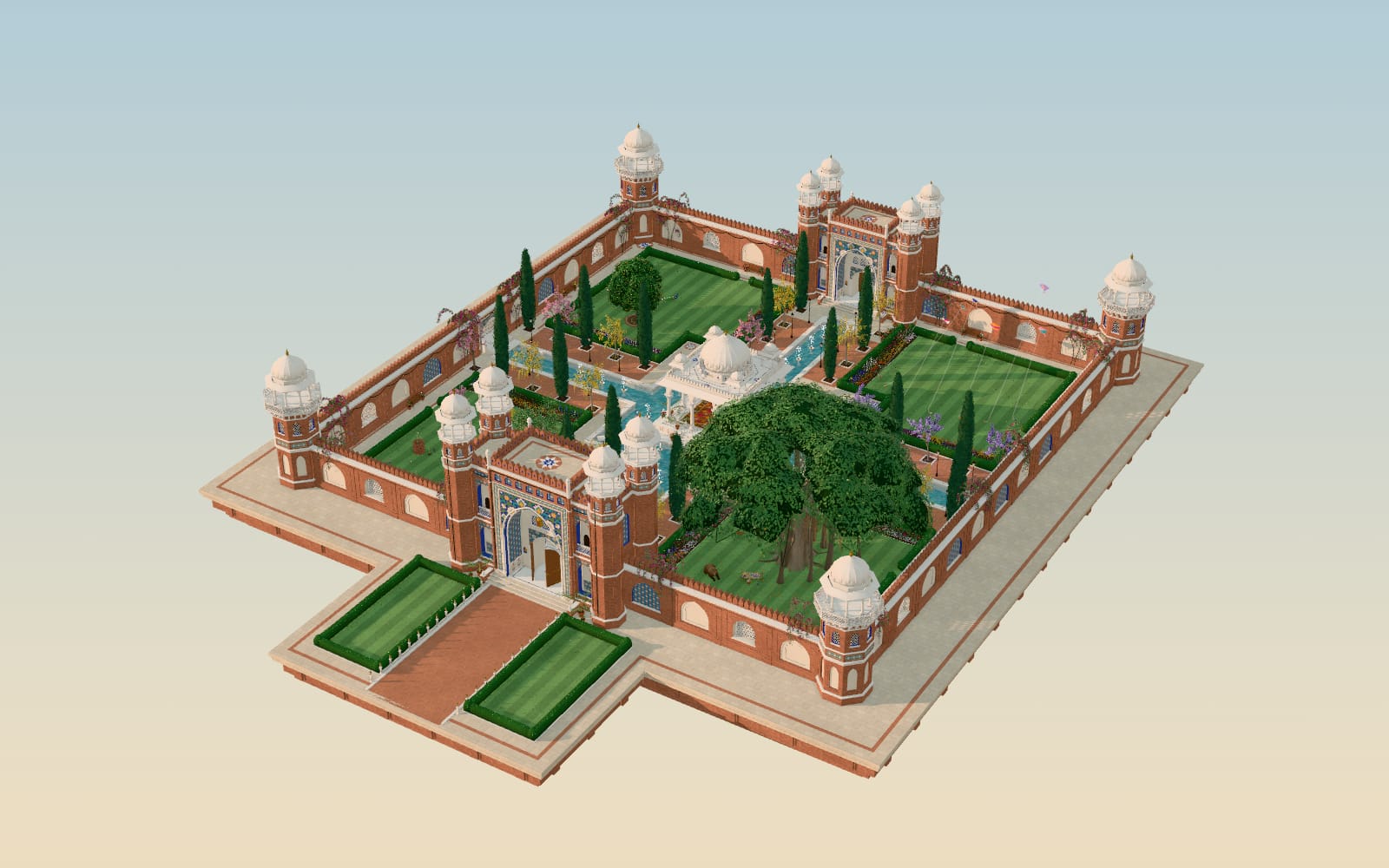
When I talk about operational architecture, I mean it structurally. A building stands because the design is right, whether or not the architect is in the room. An agency's architecture has three load-bearing layers. Miss any one of them and the structure fails above a certain height.
- Client acquisition systems: pipelines, qualification criteria, proposal frameworks and follow-up sequences that run without founder involvement.
- Delivery architecture: project structure, handoff protocols, quality checkpoints and feedback loops built into the process, so quality does not rest on one person's judgment.
- Knowledge management: documented decisions, playbooks, post-mortems and institutional memory, so new hires do not start from zero and departing employees do not take the company's intelligence with them.
Most agency owners focus almost entirely on client acquisition and hardly at all on the other two. The result is a leaky pipeline. Clients come in through heroic sales effort, get delivered through heroic execution effort, and leave no usable knowledge behind. Every project starts from scratch, and every client feels like the hardest one. An agency in that state is handling a recurring emergency with invoices attached, and calling it growth.
Delivery architecture is the layer most design agencies resist hardest. Designers tend to treat process as a constraint on creativity. I see it the other way: process protects creative time by removing the overhead of re-deciding the same things on every project. When you have a documented discovery framework, a defined feedback cycle and a clear definition of done, your designers spend their energy on design and much less of it on managing ambiguity. The creative output goes up.
Systematize how decisions get made
The standard advice for agency founders trying to scale is to productize their services. Offer a fixed-scope UX audit for $5,000. Package your deliverables. Standardize your offer. It sounds clean, and in my experience it mostly falls short. Productizing services solves a pricing problem and leaves the dependency problem untouched. You can have a perfectly packaged offer and still be the only person who can execute it or check its quality. All you have done is make the constraint more expensive.
What scales is systematized decision-making. The difference is subtle but structural. Productizing services means you define what you deliver. Systematizing decisions means you define how your team decides: what counts as good work, when to escalate, how to handle scope creep, what a successful client relationship looks like at 30 days versus 90 days. When your team can make the decisions you would make, without asking you, you have something a packaged offer can never give you: a business that does not need you in the room to function.
Most agency founders do not want to exit, so I do not think the goal is a business you can sell. The goal is a business that does not punish you for taking a week off, does not collapse when a senior person leaves, and does not require you to personally close every client worth caring about. That business comes from how it is designed more than from how hard you work. Hard work is what made you a good freelancer. Design is what lets the company run without you.