Signal vs. Noise: The Discipline of Strategic Altitude
// 01. THE NEW SCARCITY
We have been told the scarcest resources in business are capital and talent. Wrong. Capital is abundant — there are more funds, more angels, more syndicates than ever before. Talent is findable, buildable, scalable. The actual scarcity — the thing that separates the builders who last from the ones who flare out — is clarity. The ability to see what actually matters, stripped of the static the modern world generates by the second.
Information abundance is the new poverty. That sounds counterintuitive until you sit across from a founder who has read every Substack, attended every conference, and can cite every hot take from the last three weeks — but cannot articulate a coherent three-year architecture for their company. They are drowning in input. There is no synthesis. The firehose is open and they have mistaken drinking from it for thinking.
The market rewards synthesis, not consumption. It rewards the person who can sit with incomplete information, tolerate the ambiguity, and still extract the structural truth underneath. That is not a talent. It is a discipline. And it begins with the deliberate decision to create silence.
// 02. WHY ALTITUDE CHANGES EVERYTHING
When you are inside the system, you see symptoms. A churn spike. A missed quarter. A competitor announcement. A viral thread claiming your market is dead. These things feel urgent because they are proximate. They are right in front of you. But proximity is not the same as importance. Most founders are reacting to symptoms their entire careers and never once interrogate the underlying structure that keeps producing them.
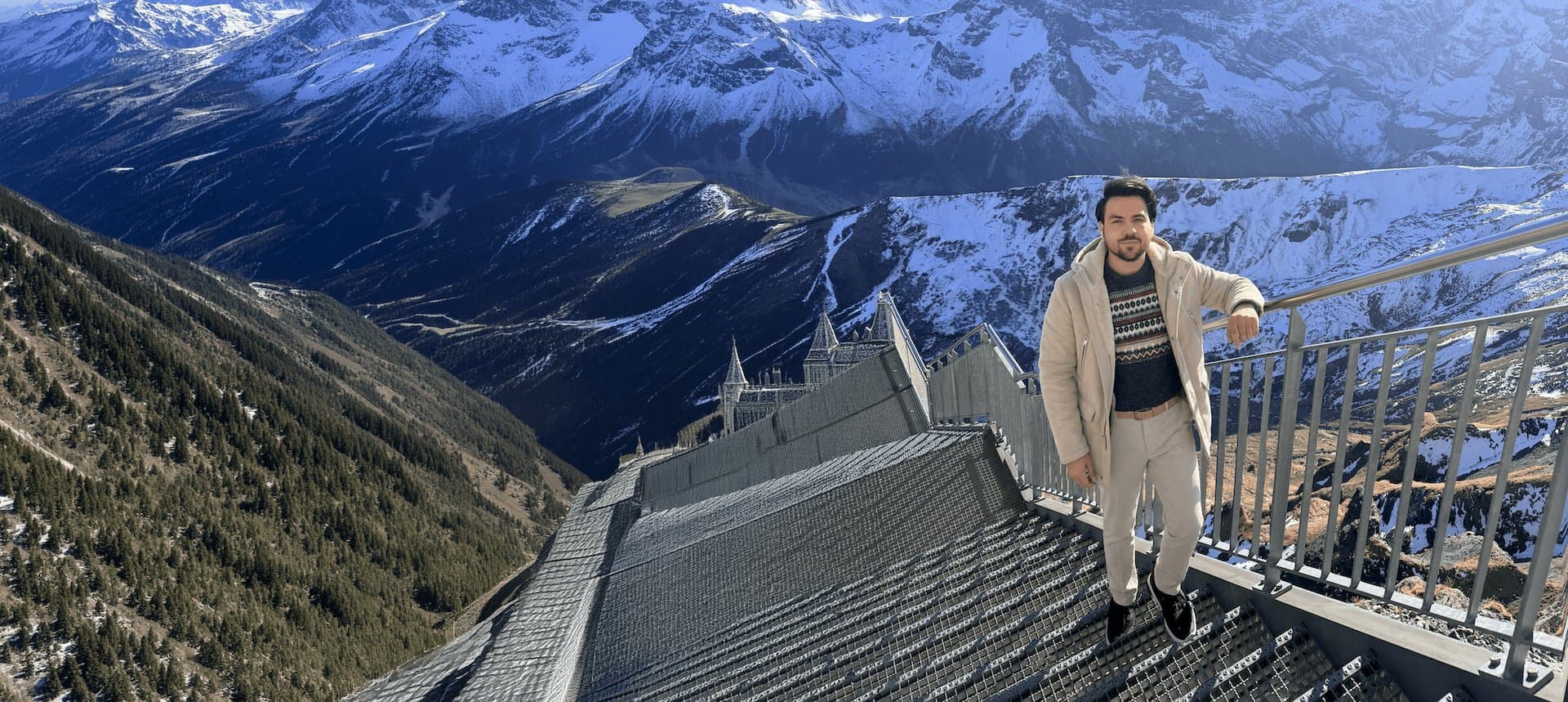
You cannot architect the future with a cluttered mind. In a world obsessed with the urgency of the next notification, the ultimate competitive advantage is altitude. The space to step away, view the system from 10,000 feet, and separate the signal from the noise.
Altitude changes what you are looking at. From ground level, you see the trees. From altitude, you see the forest, the river running through it, and the fact that there is a highway being built three miles east that will change the value of all of it. The strategic decisions — the ones that compound over years — are made from that vantage point. Not in Slack. Not in a war room at 11 PM. Not in reaction to someone else’s announcement. They are made in the quiet, after you have deliberately removed yourself from the noise long enough for the system to become visible.
This is why I travel. Switzerland is not a vacation for me — it is altitude, literally and strategically. There is something about physical distance from the operation that enforces cognitive distance. You stop fighting fires. You stop attending the standups. And in that stillness, the architecture of what you are building — or should be building — comes into focus with a clarity that is simply not available when you are inside it.
// 03. BUSYNESS AS AVOIDANCE
Here is the uncomfortable truth most founder ecosystems will not say out loud: most busy founders are not busy because their work demands it. They are busy because busyness is an excellent disguise for avoiding strategic thinking. Strategic thinking is uncomfortable. It requires sitting with hard questions that do not have clean answers. It requires admitting that your current roadmap might be architecturally wrong. It requires saying out loud, to yourself, that you have been optimizing a local maximum.
At Turing Venture Capital, the investment decisions I am most confident in were never made on pitch day. Pitch day is theater — high energy, sharp decks, founders in performance mode. The real decisions came from months of quiet analysis. Reading the market structure. Mapping the competitive architecture. Sitting with the question of whether this founder was building a feature or a foundation. The best signal almost always came after the noise settled.
The conference circuit is a masterclass in noise generation. Thousands of founders exchanging hot takes, performing insight, collecting business cards, absorbing the consensus view of what matters this quarter. And then going home and adjusting their strategy accordingly. This is how entire industries end up chasing the same trends at the same time and wondering why differentiation is so hard. You cannot develop a non-consensus view by consuming consensus content at scale.
I stopped attending most conferences years ago. I stopped leaving Slack notifications on. I stopped reading the daily founder newsletters that package last week’s thinking as this week’s revelation. Not because I think I know everything — I do not — but because I realized that my best thinking happened in the gaps I protected, not in the streams I subscribed to. The discipline of saying no to noise is not arrogance. It is the prerequisite for signal.
// 04. THE PRACTICE
Strategic altitude is not a personality type. It is not something you either have or you do not. It is a practice, and like any practice, it requires structure. You do not accidentally find clarity. You architect the conditions for it. That means scheduled disconnection — real disconnection, not leaving your phone face-down next to your laptop. It means long-form reading over feed scrolling. It means conversations with people who think differently than your immediate circle, not more of the same echo chamber dressed up as networking.
At BearPlex, we build architecture for a living — systems that need to be coherent, scalable, defensible. The same principles apply to thinking. A cluttered architecture fails under load. A cluttered mind fails under complexity. And the complexity of building companies in 2024 — the pace of AI, the volatility of markets, the optionality paralysis — will break any mind that has not been deliberately structured to handle it.
The founders who will matter in ten years are not the ones who moved the fastest in the noise. They are the ones who found the signal early, committed to it with conviction, and had the discipline to ignore everything that was not structurally relevant to what they were building. Hype is a temporary tactic. Architecture is a permanent advantage. And you cannot architect anything from inside the static.
Continue the
Conversation.
Follow for real-time architectural thinking, investment signals, and unfiltered takes.
LET'S CONNECT→